报告题目:Artificial Intelligence in Disease Diagnosis and Precision Medicine
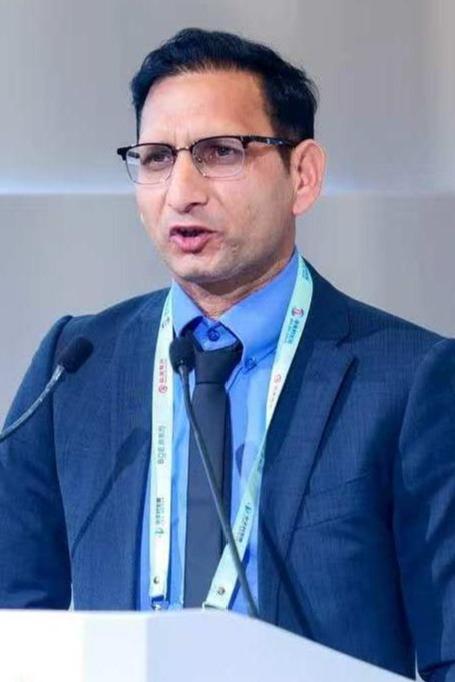
报告人:Sajid Farooq
报告时间:2026年6月10日 14:00
报告地点:17幢401会议室
报告简介:Artificial intelligence (Al) revolutionized disease diagnosis and clinical decision-making by enabling the analysis of complex biomedical data with unprecedented accuracy. In this talk, we examine the application of machine learning (ML) and deep learning (DL)techniques in breast cancer, autism spectrum disorder (ASD), malaria, tuberculosis (TB), and diabetes. In breast cancer, Al models improve tumor detection and classification using medical imaging and genomic data. For ASD, ML algorithms identify neuroimaging and behavioral biomarkers that enhanced diagnostic precision. Active learning approaches demonstrate high sensitivity in malaria detection from microscopic blood-smear images, supporting rapid diagnosis in endemic regions. In TB, Al-based frameworks predict drug resistance and disease progression through the integration of genomic and clinical datasets. Similarly, predictive models improve diabetes screening, risk stratification, and complication forecasting. Overall, Al significantly enhanced diagnostic performance, personalized treatment planning, and healthcare delivery, while challenges related to interpretability, data quality, and clinical generalizability remained important considerations for future implementation.
报告人简介:Dr. Sajid Faroog joined the College of Mathematical Medicine at Zhejiang Normal University in 2024. His research focuses on the design of frameworks based on Aland Machine learning for prognosis and diagnosis of various diseases such as Malaria, Breast Cancer, TB, Autism etc. His work has been published in leading journals, including Expert System With Applications, Polymers, Spectrochimica ActaA, Cognitive Neurodynamics, and IEEE Sensors. Currently, he is affiliated with Zhejiang University, Taizhou Hospital, Taizhou University, Federal University of Pernambuco Brazil, PUCI University Rio de Janeiro. His current research interests center on machine learning-assisted medicine discovery and disease detection. Overall, he published 55 papers in different journals, among them 33 as a first orcorresponding author.